
Welcome to Our Place
Protecting Breathtaking Volcanic Ecosystems, Pristine Waters, and the Darkest Skies in Colorado.
Nestled within Southwest Colorado, our work is dedicated to the enduring health and vibrancy of a truly magnificent landscape: the Lake Fork of the Gunnison River Basin. The river carves a continuous vertical lifeline through a sweeping elevation gradient from 7,500 feet all the way to 14,309 feet. This dramatic terrain weaves through diverse volcanic ecosystems that transition seamlessly from rich sagebrush valleys to fragile alpine peaks.
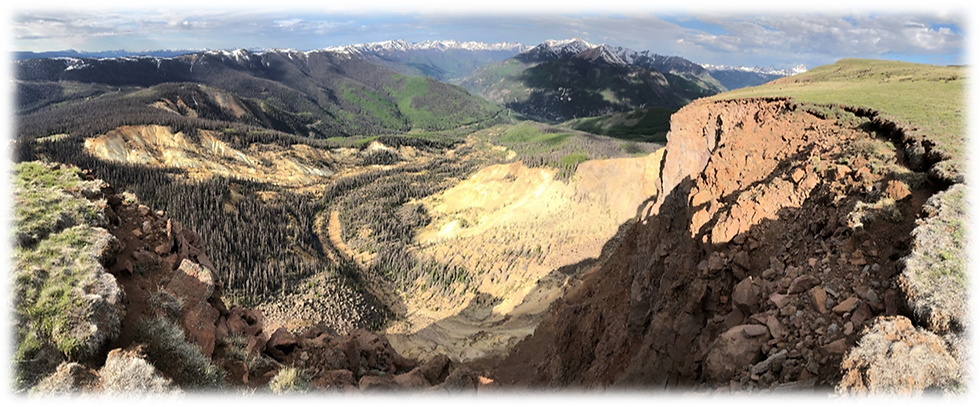
The Lake Fork Basin: A Watershed Defined by Place
This is a land protected by its untamed isolation. This extraordinary isolation has fostered a rare ecological haven, sheltering a rich tapestry of biodiversity. The Lake Fork of the Gunnison River Basin spans Southwest Colorado’s volcanic landscape, connecting alpine headwaters, wetlands, forests, rivers, and communities within one of the most remote regions in the lower 48 states. From the high-altitude headwaters flowing past our soaring Centennial Peaks, down through Lake San Cristobal, our watershed is a living testament to Colorado's wild heritage.

The Lake Fork Basin is more than a geographic boundary: it is a living watershed where water, wildlife, landscapes, and communities are deeply interconnected. Understanding the basin’s unique characteristics helps guide conservation, stewardship, and restoration efforts across the region.
The Basin at a Glance
432 Square Miles
-
A connected watershed landscape within the Upper Colorado River Basin.
7,500’ – 14,309’ Elevation Range
-
From sagebrush ecosystems to alpine tundra and high mountain peaks.
41 Rare Species
-
Supporting significant biodiversity across diverse habitats.
22 Rare Wetland Types
-
Critical ecosystems for water storage, filtration, and wildlife.
82% Protected Public Lands
-
Including Wilderness areas, national forest lands, and conserved landscapes.
15% Designated Wilderness
-
Some of Colorado’s most intact and ecologically valuable wildlands.
Colorado’s 2nd Largest Natural Lake
-
Lake San Cristobal serves as an iconic ecological and community resource.
Darkest Skies in Colorado
-
A globally rare natural nighttime environment.
Historic Mining Legacy
-
Past mining activity continues to influence watershed restoration and water quality efforts.
Two Counties, One Town
-
Spanning Gunnison and Hinsdale Counties, anchored by the basin’s only incorporated town: Lake City.
The Opportunity at Hand - Watershed Stewardship
With great wildness comes a profound responsibility. A watershed is an interconnected web of land, wildlife, community, and sky. The very features that draw people to the Lake Fork Valley also present our greatest opportunities for proactive, community-driven stewardship:
-
Restoring Vital Ecosystems: Generations of historic mining have left behind a legacy of abandoned mines with documented pollution impacting our headwaters. This presents a powerful opportunity for the LFVC to lead cutting-edge mine remediation and river restoration projects, turning old environmental wounds into vibrant, healthy habitats.
-
Promoting Stewardship Through Adventure: Framed by the iconic Alpine Loop Scenic Byway, world-class outdoor recreation is part of our local DNA. By linking citizen science with outdoor adventure, we are perfectly positioned to cultivate a new generation of public land stewards who understand that protecting our trails directly protects our rivers.
-
Championing Critical Habitat and Dark Skies: Just as we protect the pristine waters below, we must safeguard the space above. Scientifically verified as one of the darkest regions in the entire state of Colorado, our nightscapes are an endangered natural resource. Through our Dark Skies Initiative, we have a rare opportunity to pioneer community-driven stargazing, astrotourism, and night-sky preservation.
-
Building Capacity for Environmental Discovery: By transforming our local public spaces and land holdings—like the Lake Fork Earth and Sky Center—into outdoor teaching laboratories, we are developing the infrastructure needed for research, education, and meaningful outdoor discovery.